


Starfront Observatories 2-year Review - Worth It or Too Good to be True?


In July of 2024, I made a video introducing Starfront, a remote observatory that quickly became popular because of how affordable it was compared to most other places.
I installed my scope there, interviewed Bray Falls who is one of the main guys running the place, told you some facts about the idea behind Starfront and explained their long-term goals.
Well... Starfront blew up like crazy! In two years, they went from a few customers to reaching more than a thousand telescopes!
The question is, is it worth it?
In this post, I’ll cover several main aspects of my experience with Starfront in the past two years. I’ll tell you the truth about the reliability of the place, the weather, the maintenance quality, the hidden costs, and of course, the quality of the images you get.

Table of Contents:
The Weather
Uptime and Reliability
Observatory Support
Total Costs
Data Quality
Conclusion
Starfront Observatories Weather
Let’s start with the weather, because why pay to place your telescope under very dark skies if it’s always cloudy?
Number of Clear Nights at Starfront
The most important is of course the number of clear nights. I don’t like asking any observatories directly how many clear nights they have per year, because they could super easily lie or at least exaggerate, and give us a higher number. Luckily, there is a very cool tool online which was built by RawNoiseAstro called StellarVision. Here, we have all the data we can think of, in real time, about Starfront.

If we go to the Weather tab, we see the weather as of right now, but it we go to the History tab, we can change the filter to “All-time” and see exactly how many nights the roof was open since the tool started tracking it. So from June 1st 2026 to the day of writing this review in September of 2026, there has been 75 out of 105 nights where the sky was clear and the roof open.
That is about 71.43% of clear nights.
How Many Nights Did I Image?
Now, how many nights did I actually image?
Well, the answer is simple: more than I ever needed! And that’s a problem you might also encounter if you have your scope at a remote observatory for a long while. At some point, you either run out of ideas, have too much data, or simply want to take a break!
In my case, I quickly got way too much data, so much that I still have files waiting to get processed from more than a year ago. This is also why now, I’m having fun doing very long projects, like 100 hours integration times, and not feel like I’m missing anything.

Expectations Vs. Reality
When it comes to the expectations I had before installing my scope there, I would say the weather is similar to what most other observatories have, which of course makes sense. No one is going to invest in building an observatory without doing research on the weather first.
So in my experience with others like Utah Desert Remote Observatories and observatories in New Mexico, I would say Starfront is similar. They’re all excellent.
Starfront Observatories Uptime and Reliability
Now if the weather is good, it would really suck if problems like an internet outage, a power issue, or the roof not opening stopped you from taking advantage of the clear sky, right? So how often did I encounter downtime periods in the past 2 years?
The quick answer is: A few, but never any that actually bothered me. Let me explain:
There were some Internet outages, but those were always communicated to us beforehand on the Discord, and they usually happened when they update their servers, which they do usually during daytime.

Power issues were extremely rare. I remember only one and it didn’t last long.
Same for the hardware failures. Maybe the roof closed unexpectedly once or twice, but that was a very long time ago, near the beginning. Since then, no problems ever.

The good thing is that the guys at Starfront don’t sleep. Well, they do sleep, but you know there’s always someone ready to fix a problem if something happens.
Starfront Observatories Technical Support
I won’t lie to you, when I first heard of Starfront’s goal to host hundreds to thousands of telescopes with their low entry cost, there was ONE thing that I felt would be very difficult to take care of… and that is maintenance and support tickets.
Most remote observatories have one or two technicians on site, but imagine having 10, 30, 250 active tickets from customers asking to replace cables, polar align, or fix your collimation? So how does Starfront handle that?

Well, the answer, after two years and several tickets submitted for problems that occurred to my rig that was no fault of their own, is VERY FAST. Seriously, the response time between submitting a ticket and getting a response is always less than 24 hours. The quality of the fix itself is fine so far, as I haven’t had to follow up on something they already fixed, and the communication is always super friendly and… nice.
Learn All About Astrophotography

When I bought my first telescope, I was overwhelmed. There were so many cables, so much software, and everything felt complicated. That's exactly why I created the Deep Sky Imaging course.
My goal was to make the learning process as simple as possible, so when you're ready to start imaging, you don't have to figure it all out alone.
Check out the hundreds of lessons, the forum access and much, much more!
Starfront Observatories Total Costs
How much can you expect to spend for, let’s say, two years at Starfront, and are there hidden costs?
The monthly fees depend on the pier size you picked. Let’s go with either a standard pier, or a lite pier… hmmm.. let’s pretend it’s in between, so $250/month. Is this all you have to pay, and nothing more?

No, because you also have to think of:
The initial shipping: I spent $800 to ship my stuff with UPS. Yes, it was horrible, but I told myself it was a one-time thing, and tried to forget.
Repairs: In two years, I had to repair one piece of my rig, the camera. I had to pay about $450 to ship it to QHY, repair it, and get it back.
Support: Most support requests are free, but advanced stuff cost $50. I personally haven’t been charged for any of my support tickets yet, so I’ll count this as $0 within 2 years.
Insurance: Having insurance is recommend. I don’t have one because… I live for the risk. But the cost depends on your rig and insurance company.
And that’s it… so if we do some math here and assume you have about that experience over two years, you could expect a total of … $6000 in hosting, $800 shipping, $450 repairs, $? insurance. = $7250 + optional insurance in total over two years. It might sound high, but it’s still lower than some other observatories whose business models are less scopes but higher cost.
Starfront Observatories Data Quality
Seeing and Transparency is good on most nights, you can check yourself on the ClearDarkSky website.
Wind impact is super rare, I’ve had a few nights where the stars were elongated, so I’m guessing it was due to some strong winds, but without being there it’s hard to say. Also, wind is wind, you'll encounter some of it anywhere.
The sky is Bortle 1/2 and the quality of the shots is super clean and good. You can see a few examples here.

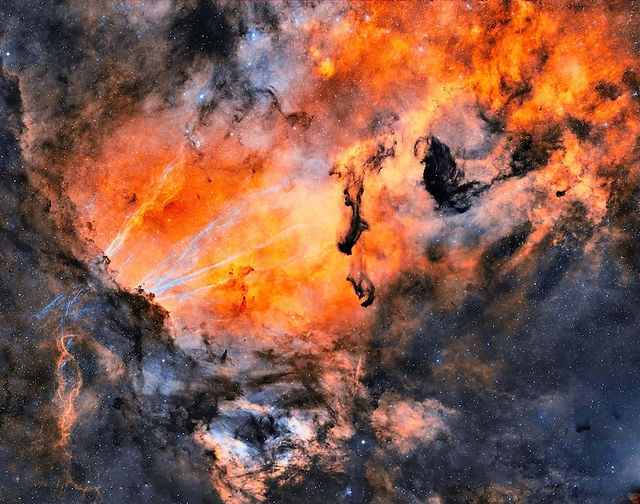
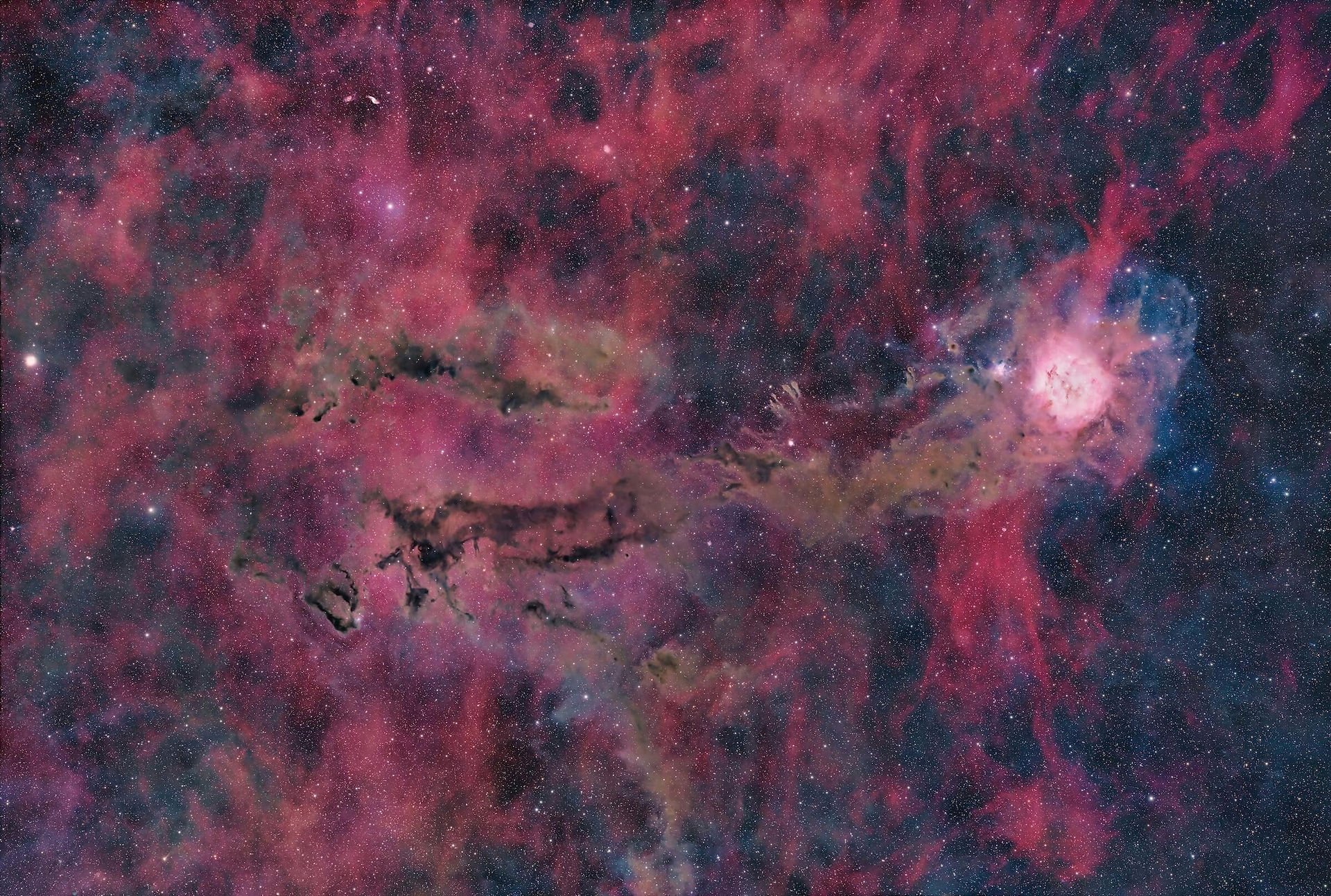
Either way, like I said earlier, the conditions were good enough to image more than i ever needed.
I’m very happy with the final results I get from my processed images, and so I really have no complaints at all on the quality of the sky.
The Perfect Equipment for Remote Imaging
Are you thinking of having a remote setup at Starfront Observatories?
High Point Scientific has several all-ready packages you can purchase to ship to Starfront. It includes everything you need to get started, and it's some great equipment that I would also recommend!

You can find the packages and check the current prices HERE if you're interested.
Final Thoughts
In two years of using Starfront so far, I've loved every second of it! I've been constantly impressed with the number of perfect nights, the speed of the technical team, and the huge community on their Discord as well.

You can learn more about Starfront Observatories on their webpage, and check out the different piers, weather data, and more.
I moved to the north of France shortly after installing my rig at Starfront, and I'm so glad I have a telescope under such beautiful skies! Even though I was used to clear nights almost every day when I lived in Las Vegas, it is the complete opposite in the North of France! The weather here is identical to what you'd have in the UK, so clouds and rain most of the time.
Starfront allows me to be able to shoot the night sky despite constantly being under terrible weather on the other side of the world.
You can also watch the video review below:
Make sure to follow Galactic Hunter on Facebook, Instagram, and YouTube to stay up to date with everything!
Clear Skies,
Antoine Grelin
Galactic Hunter
GALACTIC HUNTER BOOKS


Comments